About OctoMatic
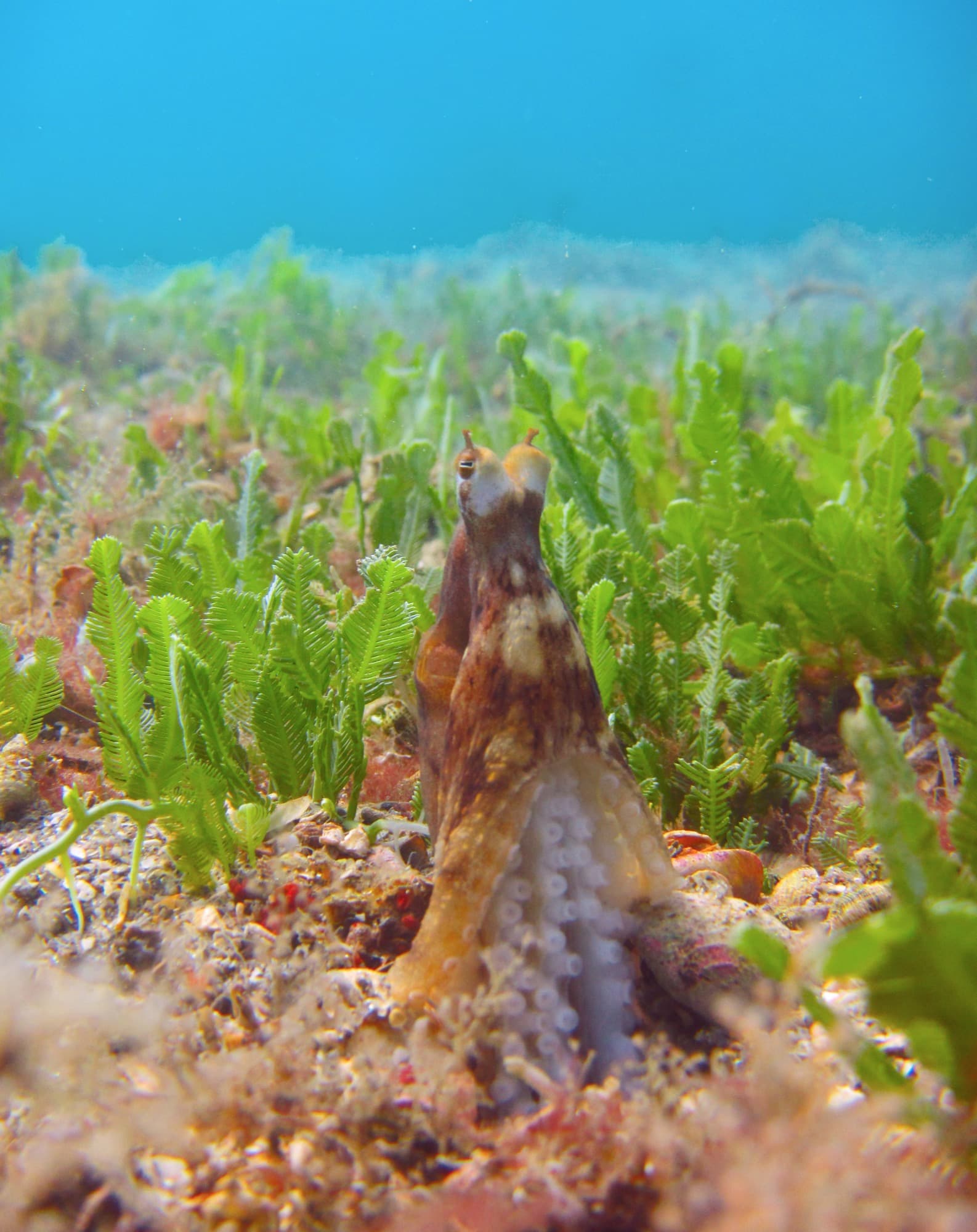
Photo: Chelsea Bennice
What is OctoMatic?
OctoMatic is a tool built for accessible octopus identification. Simply upload a picture, and an AI model suggests the closest matching species. If you want, you can then submit the sighting, with its location and date, for expert review. Approved sightings join a growing database of where and when these animals have been seen, and help refine the model for everyone who uses it after you.
What makes OctoMatic different?
Off-the-shelf AI classifiers are trained to tell a cat from a dog, or other categories that rarely get confused. Octopuses are a much harder case. Many species are camouflage specialists, can change color and texture in seconds, and several look nearly identical to each other even to trained observers. To make matters harder, octopus taxonomy is still catching up, but OctoMatic is designed to stay up to date while avoiding false IDs.
OctoMatic includes multiple safeguards such as location verification and providing commonly confused taxa. OctoMatic avoids wasteful internet scraping typical of general AI tools. Instead, it is a model with a specific task, trained on a small, curated dataset provided by researchers and citizen scientists. The hope is that a community-driven, curated classification model will facilitate easier octopus classification for all.
Quality, not quantity
For cryptic, frequently-misidentified animals, more data isn't necessarily better data. A model trained on lots of crowd-labeled photos will learn whatever mistakes or misidentifications present in those labels. And since octopuses are so easily and commonly misidentified, this hurts those models' accuracy. OctoMatic's training photos and species catalog are instead curated and reviewed by researchers, and every species page documents how to tell it apart from the taxa it's most often confused with.
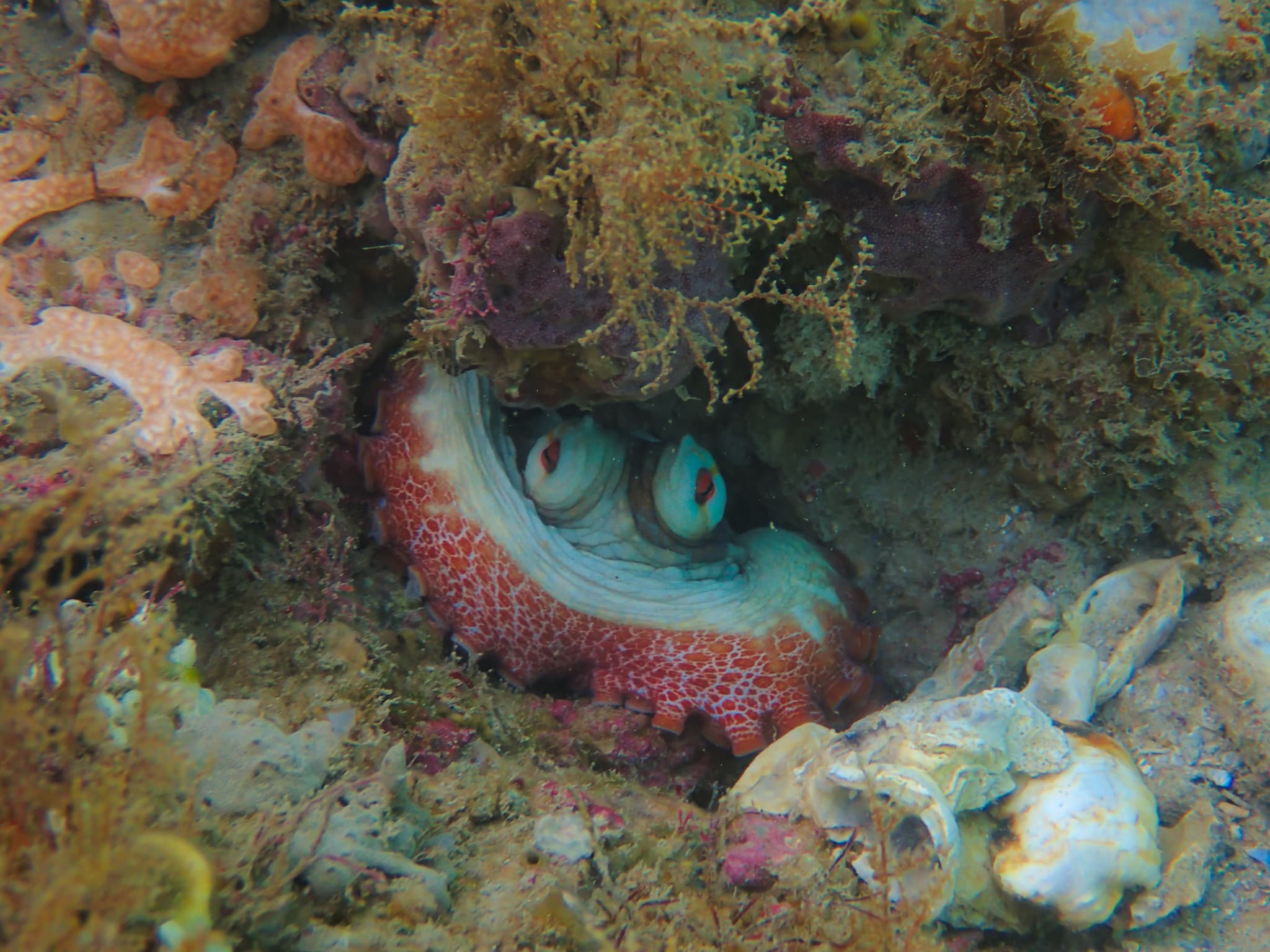
Octopus insularis
Photo: Susan Aide (CC BY)
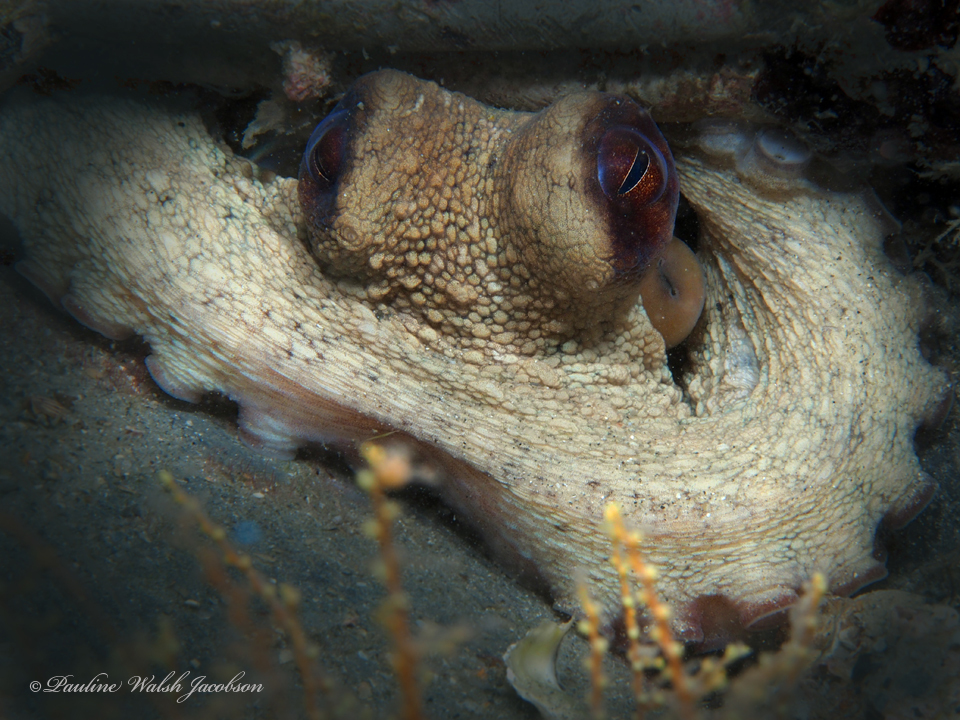
Octopus americanus
Photo: Pauline Walsh Jacobson (CC BY)
The Brazilian Reef Octopus (left) and the Common American Octopus (right) occupy overlapping habitats, geographic ranges, and morphologies, and their visual similarities can make differentiating species very difficult. OctoMatic explains the subtleties required to identify octopuses confidently.
Community-driven
Researchers alone can only be in so many places at once. Divers, snorkelers, and fishers spend a lot more time looking at octopuses in the wild than any research team. OctoMatic translates those sightings into a public tool, while promoting community engagement in marine science. Every verified submission adds to a public record of species distribution across locations and seasons, helps identify animals researchers haven't documented yet, and helps build more accurate versions of the classifier for future users.
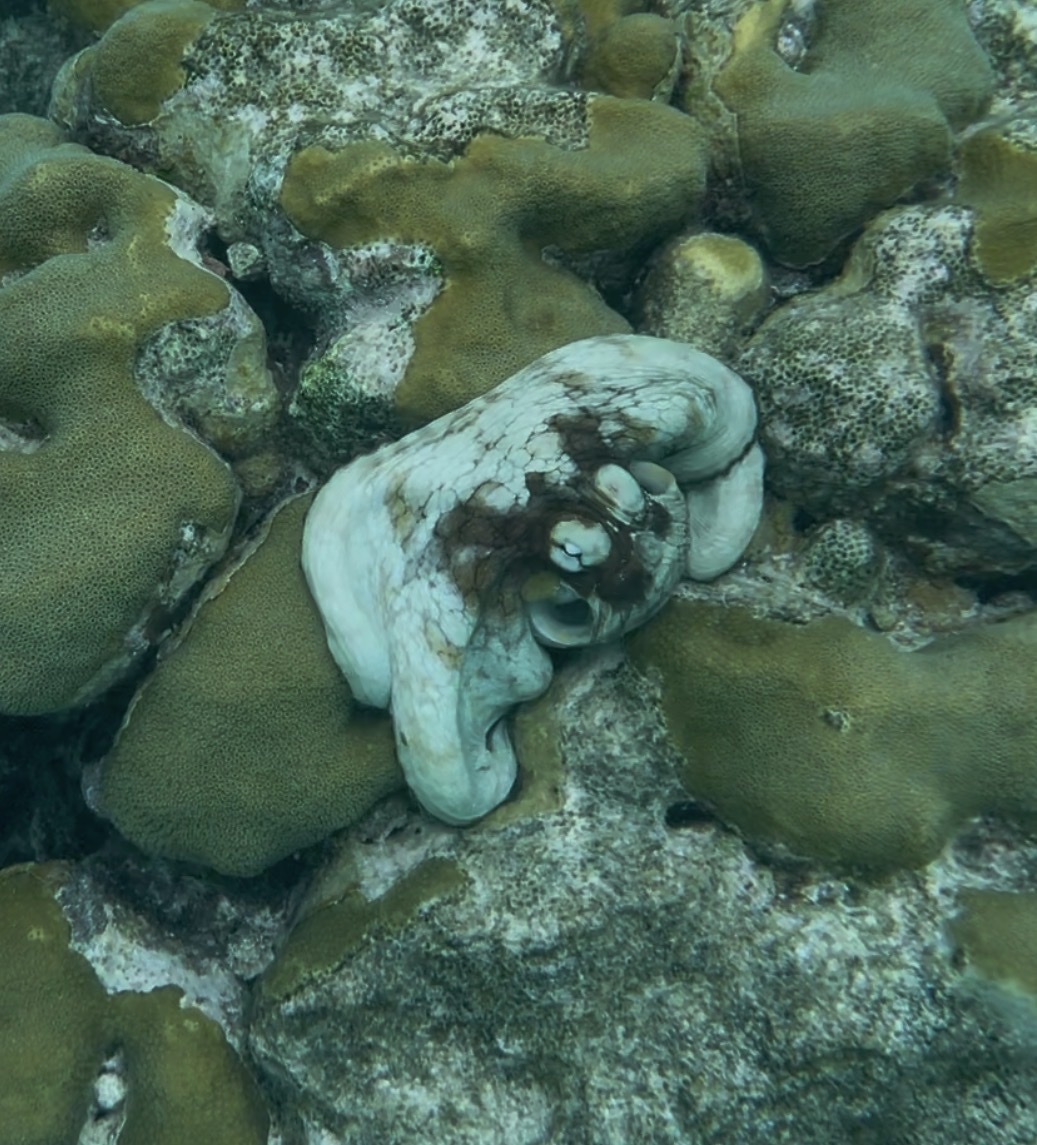
Photo: Jacob Weston (CC BY)
How it works
OctoMatic's identification model is a vision model, built on BioCLIP, a model created specifically for identification of animals and wildlife. This classifier runs entirely on your own device. The photo is analyzed right in the browser, and nothing is uploaded just to get an identification. Behind the scenes, each model version goes through several stages before it ever reaches you: it's registered, checked against the previous version on photos neither has seen before, previewed live on a phone, and only then activated.
OctoMatic's model is built on BioCLIP (ViT-B/16), developed by Samuel Stevens, Jiaman Wu, Matthew J. Thompson, Elizabeth G. Campolongo, and colleagues at Ohio State University and other institutions, as described in BioCLIP: A Vision Foundation Model for the Tree of Life (CVPR 2024). Learn more at the BioCLIP project page.